
https://en.wikipedia.org/wiki/Ecological_systems_theoy
Recently we began a unit around mindsets, and self identity. In this lesson we began to discuss where these mindsets come from, how different influences affect our mindsets and identity.
We used the model of Bronfenbrenner’s Ecological systems theory. The diagram on the resource reflects this model.
I first demonstrated the circle diagram on the board, and brought up the headings of the different things that influence us, such as our parents, our culture, our friends or our school. After a discussion and some examples, I gave out this worksheet. The back of the worksheet has an example to discuss as a class, in small groups, or as individuals. As part of this discussion you may want to raise the difference between growth and fixed mindsets, and how these influences can impact us.
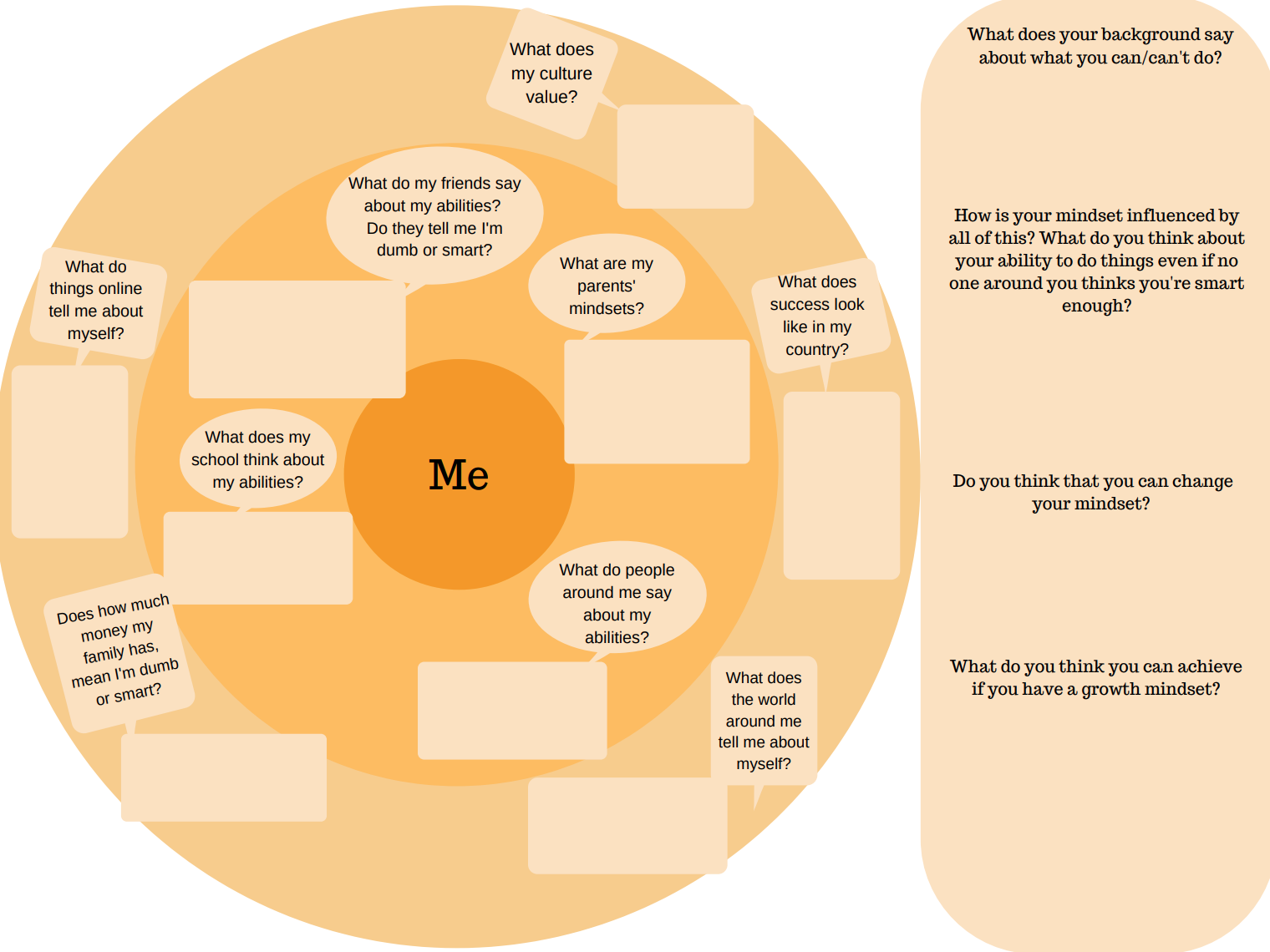
Understanding our contexts, backgrounds and assumptions are important aspects when discussing our mindsets, and identities. It provided some interesting discussions with my students about what they are told about themselves, or what their background values were, and how that influenced their own thinking. Some of the students were then able to identify what was important to them, and what their mindsets, or ideas of success were. Once they could identify what their own values were, they were able to begin making links to their attitudes around learning and what they were doing at school.
One student was convinced she was “dumb” (her own words), and has said this to me on multiple occasions. Through this worksheet, and Bronfenbrenners model, I was able to unpack with her where that belief was coming from. We discussed what her own values were, and what she believed success looked like for her. One of the things she expressed was that education/learning was an aspect of what success would look like for her. She was then able to make the link between that value and her attitudes and actions at school, and how they may need to change.
A conversation like this is just the beginning of a student being able to realise her goals, take on a growth mindset, and then actualise the goals. I hope that this handout will be a useful tool in beginning to unpack with students the influences that make up who we are, our attitudes and mindsets.
Please share how you have used this handout, or the discussions it led to in the comments below.
The handout is downloadable through this link (I would recommend printing it in A3).
 Evergrowing Education