
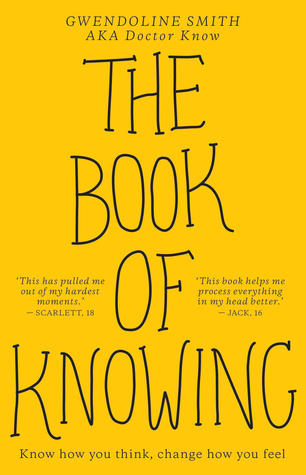
The Book of Knowing – Gwendoline Smith
This book was recommended to me by a colleague, who had found it very helpful in understanding the thought processes of the teenagers in her class. Through working with young people I had seen plenty of strange behaviours and escalations of situations, so I was curious as to whether this book could help me in those situations.
The book is based around our thought processes, and what we perceive. It acknowledges how we often get carried away with our thoughts and end up in a negative cycle. Smith identifies the different thought processes we slip into, and their downfalls, such as ‘Magnification/Catastrophising’. In this thought process, issues seem much bigger than they actually are, and things are blown out of proportion. I have observed this often, especially with teenage girls. A situation can seem very minor to me when they explain it, as simple as someone saying something on a chat, or even just a look. But to the girls, in their minds, with everything else going on in there, they have catastrophised it. It has been blown way out of proportion, and more often than not, the other teenagers have latched onto that, and continued to blow it up. This book helped me understand some of the thought processes that are in play in those situations and how one might deal with them. It would be far more effective if the teenagers themselves were able to understand these thought processes, and choose to take back some control over their own thinking, but there’s only so much I can do as a teacher. A key quote from the book that is not only useful, but encapsulates the book; “If you understand how you think, you will be able to manage how you feel.” (Smith, 38)
Smith highlighted the difference between reality, and how we think. “You cannot change the reality, it just is. You are the one who has to adapt.”(Smith) This challenges us as readers to examine how our thoughts affect our idea of reality. She claims that our perspective and attitude can alter how we view and feel about a situation. Separating our feelings from facts and our beliefs can be a helpful tool for rationalising your thoughts.
Smith highlights the domino effect that body, behaviour, mood and mind have on each other. This is something that I have not only observed in others, but in myself as well. Anxious thoughts often produce physical feelings of un-wellness, which then continues to spiral and affect mood. Being able to understand the different thought processes at play helps in combatting this destructive spiral that we often find ourselves in.
This book was an easy read, very accessible to teenagers, parents and educators alike. I found it helpful to understand and realise some of the thought processes and how they affect us.
If you’d like to give it a read, it’s available from Mighty Ape: The Book of Knowing
 Evergrowing Education